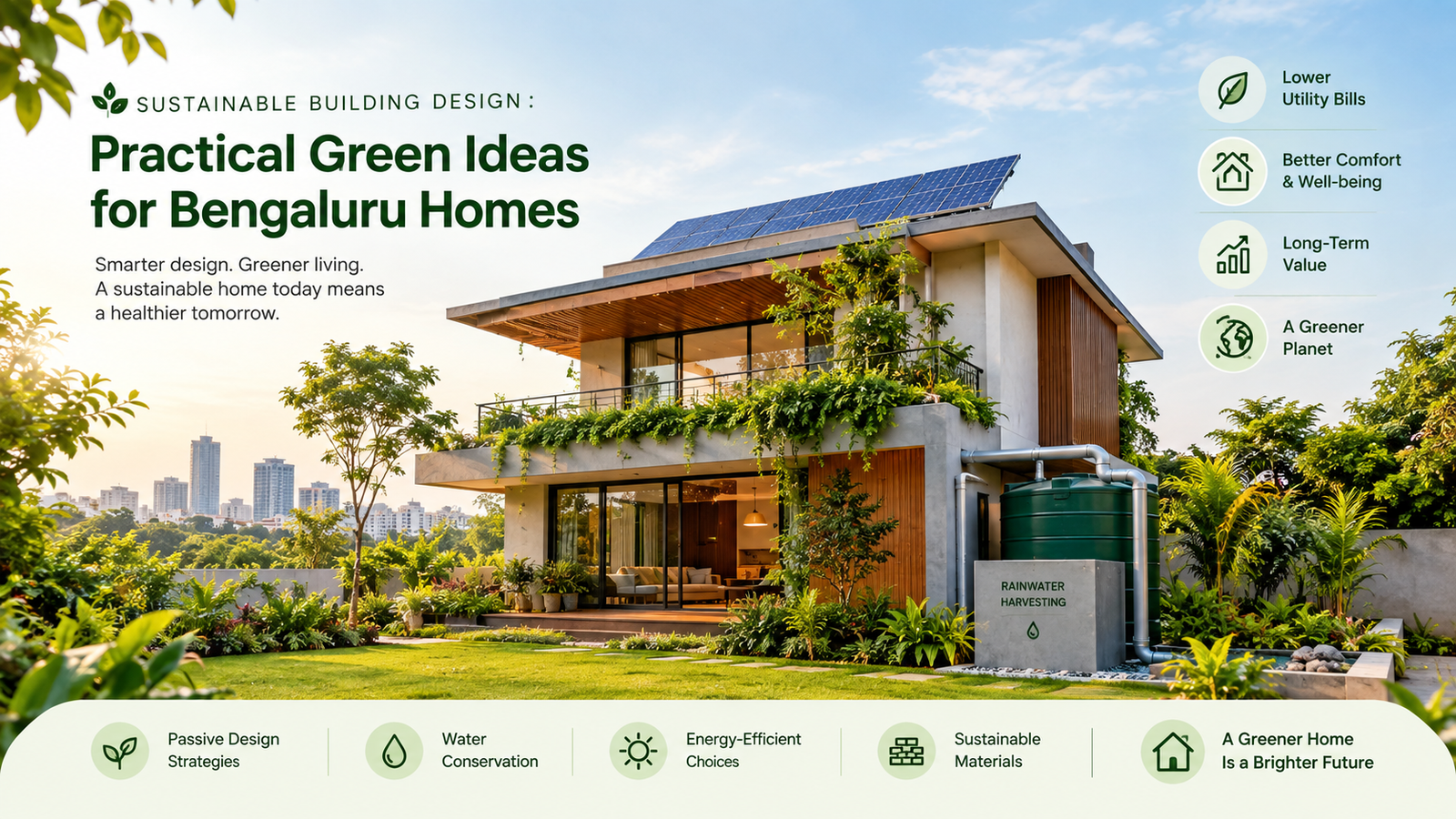
Sustainability in construction is no longer just a buzzword — it's becoming a practical necessity, especially in a fast-growing city like Bengaluru where water scarcity, rising temperatures and increasing energy costs are real concerns for homeowners. The good news is that sustainable design doesn't have to mean expensive or complicated. Many green building practices are simple to incorporate if planned from the design stage itself.
Why Sustainable Design Matters
• Lower utility bills through reduced energy and water consumption
• Improved comfort with better natural light and ventilation, reducing dependence on artificial cooling and lighting
• Long-term value as sustainable homes are increasingly preferred by buyers and tenants
• Environmental responsibility — reducing a household's overall carbon and water footprint
Passive Design Strategies
Before adding any technology or fittings, good architectural planning itself can make a home more sustainable:
• Orientation — positioning the building to maximize natural light while minimizing direct heat gain, particularly on west-facing walls
• Cross ventilation — window and door placement that allows natural airflow through the home, reducing the need for fans and air conditioning
• Shading elements — chajjas, pergolas, and overhangs that block harsh sun without blocking light
• Courtyards and open spaces — improving air circulation and natural cooling in larger plots
Water Conservation Measures
Water management is one of the most impactful sustainability measures for Bengaluru homes:
1. Rainwater harvesting — mandatory in many Bengaluru layouts and highly effective in recharging groundwater and reducing dependency on tanker water
2. Sump and recharge well design — planned early so harvested water is stored and reused efficiently
3. Low-flow fixtures — reducing water usage in taps, showers and flush systems without compromising comfort
4. Greywater recycling — reusing water from washing and bathing for gardening or flushing where feasible
Energy-Efficient Choices
• Solar water heaters and rooftop solar panels — reducing electricity dependence, especially effective given Bengaluru's favourable climate
• LED lighting and energy-efficient fixtures planned into the electrical layout from the start
• Insulated roofing to reduce heat transfer into the top floor
• Skylights and light wells to bring in daylight and cut down on daytime artificial lighting
Material Choices That Support Sustainability
• Using locally sourced materials to reduce transportation impact
• Fly-ash bricks or blocks instead of traditional clay bricks
• Durable, low-maintenance finishes that reduce the need for frequent repainting or repair
Sustainability Doesn't Mean Compromise
A common misconception is that sustainable design costs significantly more or limits aesthetic choices. In reality, most passive design strategies — orientation, ventilation, shading — cost little to nothing extra if planned at the design stage, and they pay for themselves over time through lower utility bills.
The Bhoomi Architects Approach
At Bhoomi Architects, sustainable design principles are built into our planning process from the very first layout — considering orientation, ventilation, water management and material selection together, rather than treating "green" features as optional add-ons. The result is a home that's comfortable, efficient and lighter on your monthly bills for years to come.
Thinking about building a sustainable home in Bengaluru? Get in touch with Bhoomi Architects to design a space that's efficient, comfortable and built for the future.