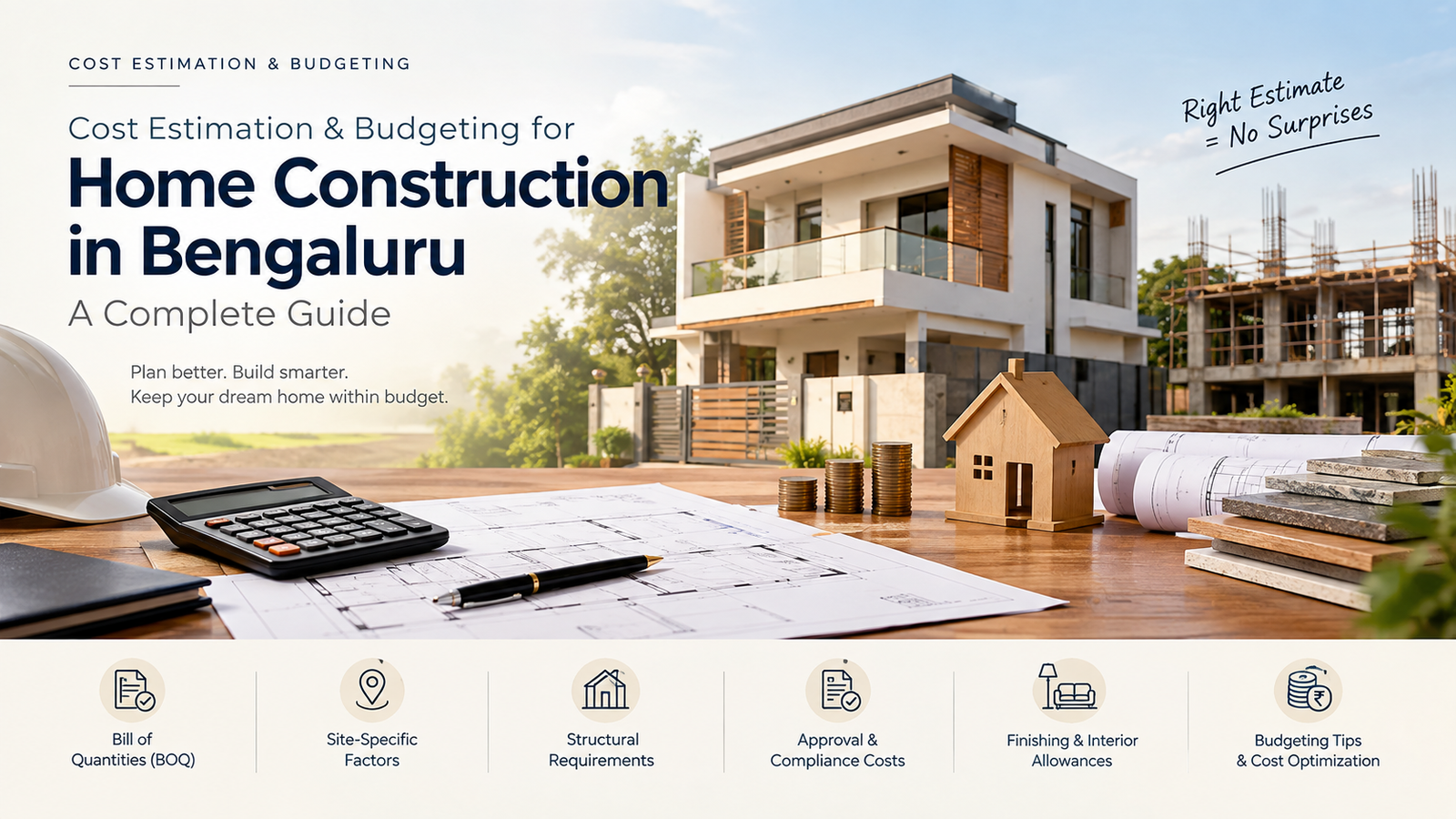
Building a home is one of the biggest financial decisions a
family makes — and in a fast-growing city like Bengaluru, construction costs
can shift quickly due to material prices, labour availability and approval
requirements. Without accurate cost estimation, homeowners often end up with
budget overruns of 20-30%. This guide breaks down how proper estimation and
costing keeps your project financially predictable from foundation to finish.
Why Cost Estimation Matters Before You Start Construction
Many homeowners jump straight into construction with only a
rough budget in mind. This almost always leads to:
- Mid-project
cash shortages that stall work - Compromised
material quality to "adjust" costs later - Disputes
with contractors over scope and pricing - Delayed
handovers due to funding gaps
A detailed estimate, prepared before the first brick is
laid, gives you a realistic financial roadmap and protects you from unpleasant
surprises.
Key Components of an Accurate Construction Estimate
1. Bill of Quantities (BOQ)
A BOQ breaks down every material and quantity required —
cement, steel, sand, bricks, tiles, fittings — based on your approved
architectural and structural drawings. This is the single most important
document for accurate budgeting, since it ties cost directly to design.
2. Site-Specific Factors
Soil type, plot slope, water table depth and site
accessibility all affect foundation design and, in turn, cost. A site
inspection before estimation ensures numbers reflect ground reality, not just
standard assumptions.
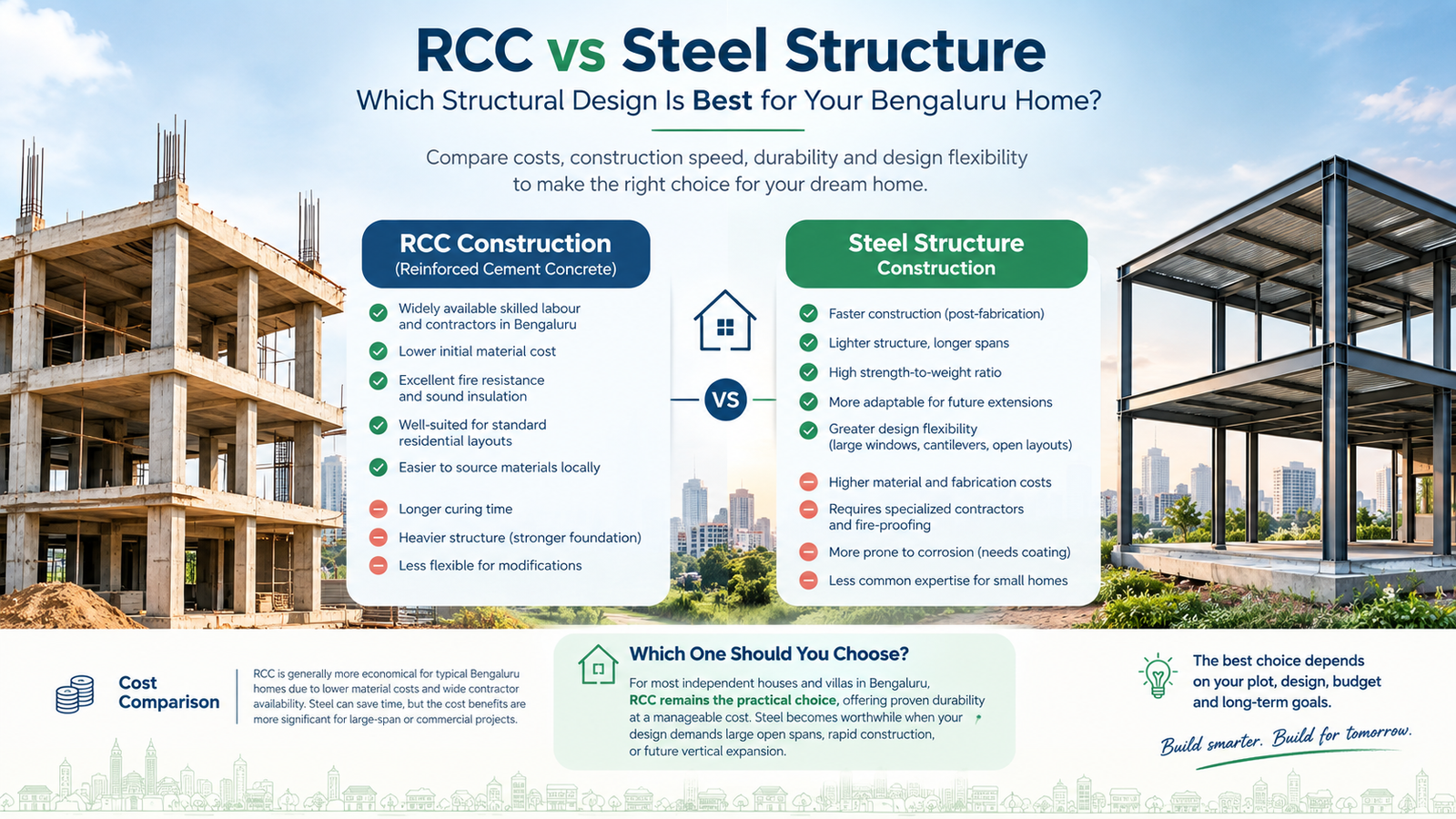
3. Structural Requirements
The structural design — RCC or steel, number of floors, span
of slabs — determines a large share of your budget. Over-designing wastes
money; under-designing risks safety. A qualified structural engineer strikes
the right balance.
4. Approval & Compliance Costs
Depending on your plot's jurisdiction — BDA, BMRDA, KHB,
Panchayat or others — approval fees, sanction charges and compliance costs
vary. These should be factored into the budget upfront, not treated as an
afterthought.
5. Finishing & Interior Allowances
Flooring, painting, modular kitchens, electrical fittings
and plumbing fixtures can range widely in cost depending on brand and finish
level. Setting a clear allowance for each category prevents scope creep later.
Tips to Optimize Your Construction Budget
- Get
drawings finalized before costing — Estimates based on incomplete
plans are guesses, not budgets. - Build
in a 10-15% contingency — Material price fluctuations and site
conditions can shift costs even with careful planning. - Phase
your interiors if needed — Structural and civil work should never be
compromised to save money; interiors can be phased instead. - Choose
transparent contractors — Work with firms that provide itemized BOQs
rather than lump-sum quotes with no breakdown. - Review
costs at each milestone — Compare actual spend against the estimate at
foundation, structure, and finishing stages.
How Bhoomi Architects Helps You Budget Right
At Bhoomi Architects, our Estimation & Costing services
include detailed BOQ preparation, quantity estimation, cost analysis and
ongoing cost optimization throughout the project. Because we also handle
architectural design, structural detailing and construction under one roof, our
estimates are grounded in the actual drawings and site conditions — not generic
per-square-foot averages.
Whether you're planning a residential home, a commercial
building, or a turnkey project in Bengaluru or Karnataka, getting your numbers
right from day one is the foundation of a stress-free build.